
Info for RDF4J Developers

  • Checking dependency updates
    RDF4J includes a Maven-integrated script that reports the update status of all external dependencies across the multi-module build. It queries Maven Central directly and prints two tables: one grouped by version status, and one for dependencies that have been re-released under different Maven coordinates. Running the report From the project root, run: mvn -N -P dependency-updates validate The -N flag (non-recursive) is required so Maven only processes the root POM and the report is printed once.
  • Developer workflow and project management

    In this document the Eclipse RDF4J project workflow and developer best practices are explained. It contains information on how to create branches, tag releases, manage pull requests, create and schedule issues, and so on.


  • RDF4J merge strategy

    RDF4J values a clean but accurate commit history on our main branches, where commits are meaningfully described and linked back to the issue that they address. To achieve this, we merge everything using merge-commits, and we may ask you to squash your pull request branch before we merge it.


  • Release management

    This document outlines how to create a new release of RDF4J.


  • Squashing Commits

    When submitting a pull request to RDF4J, we sometimes ask that you squash your commits, to clean up the commit history a bit. Here we explain a simple way to do that.


  • Testing
    Testing the RDF4J Workbench Locally The docker/ directory contains scripts and a Docker Compose setup for building and running RDF4J Server and Workbench locally. All commands below are run from that directory. cd docker Quick start The simplest way to build and start everything in one step: ./run.sh This script will: Run build.sh to build the Maven project and produce the SDK ZIP Copy the ZIP into ignore/rdf4j.zip (required by the Dockerfile) Build the Docker image via docker compose build Start the container with docker compose up Wait until the server is ready and print the Workbench URL Once ready, the output will confirm:

About

Eclipse RDF4J™ is a powerful Java framework for processing and handling RDF data. This includes creating, parsing, scalable storage, reasoning and querying with RDF and Linked Data. It offers an easy-to-use API that can be connected to all leading RDF database solutions. It allows you to connect with SPARQL endpoints and create applications that leverage the power of linked data and Semantic Web.
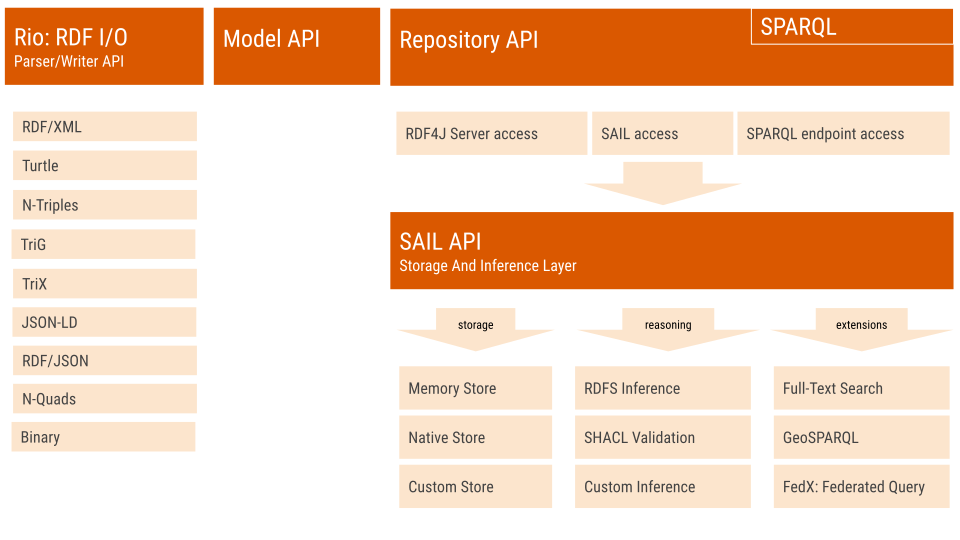

RDF4J Architecture

Back to the top